Saturday, May 28, 2022

Funded on Kickstarter! - The 100 Greatest Console Video Games: 1988-1998


Wow, funded in just three days! Thanks to everyone who helped make this project a resounding success! Since I’m so jazzed about this, I decided to post my preface to the book where everyone can enjoy it. Even though the book has reached its goal, the campaign has a long way to go. You can back the book by clicking HERE.

Without further ado, here’s the preface to The 100 Greatest Console Video Games: 1988-1998:

When I’m a guest author (and now YouTuber) at various video game conventions around the country, including such shows as Classic Game Fest in Austin and the Portland Retro Gaming Expo, the question I get more than any other is, “What is your favorite game of all time?” The answer is always Mr. Do!, Universal’s 1982 arcade game ported brilliantly to the ColecoVision and Super Nintendo (my preferred home versions). If you haven’t played this classic maze title, you definitely should check it out.

The next most frequently asked question I get from fans is if I’m going to write a sequel to The 100 Greatest Console Video Games: 1977-1987, my first book from Schiffer, published in 2014. That book, which was inspired by the 2009 edition of Bill Warren’s titanic tome Keep Watching the Skies! American Science Fiction Movies of the Fifties (McFarland), has helped me connect with fans like nothing else I’ve ever written. To this day, I get a steady diet of feedback from readers on what for me was a pure labor of love. Many people tell me it’s their favorite book of mine and one of their favorite video game books all of time.

I’m truly humbled and flattered by all the attention the book has gotten, and I had a blast researching for and writing it. In fact, it’s the most fun I’ve ever had writing a book, thanks in part to the fact that all the games in it are, by definition, great. And I LOVE that era of gaming.

When 2020 hit, and the lockdowns began due to the Covid-19 pandemic, I decided to finally do what I’ve been wanting to for quite some time: heed the fans’ wishes and start writing The 100 Greatest Console Video Games Vol. 2: 1988-1998, which picks up where the original volume left off and covers another super important decade of gaming. Thanks to advances in technology and game development during the era, most of the games featured in this book are longer, more complex, and more story-driven than those in the first volume, which in some ways made it more interesting and more challenging to write. But the key qualification for each game remained the same: it must still be fun to play today, not just historically important (although that certainly plays a role).

During the timeframe this book covers, the Nintendo Entertainment System reached its zenith with such awesome games as Castlevania III: Dracula's Curse, my personal favorite in the series, Contra, the hardcore platform shooter that popularized the Konami Code, and Super Mario Bros. 3, which many players and pros cite as the greatest video game of all time. Do you have fond memories of playing Tecmo Bowl with friends and family members? You will of course find that game—one of the most beloved sports titles for any console—in these pages.

In 1989, Sega released the fantastic Genesis console, which would introduce the world to such concepts as “blast processing” (a marketing term created by Sega), “Sega does what Nintendon’t,” and a certain furry, attitudinal blue hedgehog that quickly became the company mascot. The Genesis originally came packaged with Altered Beast, which didn’t make the cut here, but the “Genny” is well-represented in this book by such titles as: Gaiares, an amazing hardcore “shmup” with an odd name; Gunstar Heroes, a dazzling platform shooter that will make Contra fans stand up and take notice; Mega Bomberman, my personal favorite in that killer multi-player series; NBA Jam, which is entertainment personified; and of course Sonic the Hedgehog (which replaced Altered Beast as the pack-in with the console), one of the most iconic video games of all time. The Genesis add-ons even get some love in these pages, with entries for such stellar titles as Earthworm Jim: Special Edition for the Sega CD and Virtua Racing Deluxe for the Sega 32X.

Nintendo released their follow-up to the NES in 1991 with the Super Nintendo, which regularly shows up at or near the top of greatest video game console of all time lists. It is indeed amazing, featuring such legendary titles as Contra III: The Alien Wars, The Legend of Zelda: A Link to the Past, and Super Castlevania IV, each of which carried forward a series featured on the NES and amped it up considerably in terms of graphics, sounds, size, sizzle, and overall awesomeness. The console also boasted awesome RPGs (such as Chrono Trigger), groundbreaking titles (such as Super Mario Kart), and games that breathed new life into tired genres (such as Donkey Kong Country).

If you aren’t super well-versed on the Neo Geo, Phillips CD-i, Panasonic 3DO, Sega Saturn, Atari Jaguar, or TurboGrafx-16, no worries—this book features the best-of-the-best for each of these relatively obscure consoles. If you’ve never played Metal Slug, Devil’s Crush, Tempest 2000, Panzer Dragoon Saga, or Wing Commander III: Heart of the Tiger, I pretty much guarantee you will want to after reading the chapters on these great, often underappreciated gems. If you’re a hardcore gamer, you know what I’m talking about.

And, then, of course, there’s the original Sony PlayStation and the Nintendo 64, consoles that gave us games that countless people of all ages still talk about, collect, and play on a frequent basis today. (You could say that about the NES, Genesis, and SNES as well, but I digress…)

The PS1, as it’s commonly known, was released in Japan in 1994 and hit the rest of the world in 1995. It brought mature, 3D gaming into the mainstream, changing the industry forever with such sophisticated titles as: Gran Turismo, a shockingly realistic racer; Castlevania: Symphony of the Night, a masterpiece co-architect of the “Metroidvania” subgenre; Metal Gear Solid, a stealth game with movie-quality production values; and Crash Bandicoot, which showed that the PlayStation could provide simple, charming, mascot-driven family entertainment as well.

Thanks to its air of elegance and refinement, the PlayStation was seen as less of a toy than most previous consoles and was viewed as more of an accepted entertainment device along the lines of a stereo or a VCR. For many gamers, it was their first CD player as it was compatible with that then-burgeoning music format. I was extremely impressed with the PlayStation, but as an old-school gamer it was the Namco Museum collections that truly sold me on the console and made me plunk down my heard-earned cash. For the first time, I could play pitch-perfect emulated versions (as opposed to close approximations) of classic arcade games at home. (I quickly grew to love many of the system’s more advanced/complex offerings as well.)

The Nintendo 64, released in 1996, has been criticized for sticking with the cartridge format, but it has some of the best, most fondly remembered first-party titles of any console. Like Super Mario Bros. for the NES, Super Mario 64 redefined and expanded the platformer genre, this time in glorious 3D. Despite showing its age, Goldeneye 007 is a fondly remembered multi-player game that introduced the concept of the first-person shooter to many gamers who were too young to remember DOOM and Wolfenstein 3D. And games like Banjo-Kazooie, Mario Kart 64, and Diddy Kong Racing were just plain fun.

As I mentioned earlier, I had a lot of fun writing this book. I had a blast editing it as well. In fact, editing was a HUGE part of the process because, unlike the first 100 Greatest book, a number of other scribes pitched in on the project and wrote their own essays about important games they love. These creators include: Greg Sewart, former editor for Electronic Gaming Monthly; Shane Stein, Executive Producer of Adventures in Game Chasing; Brian Lesyk, host of the Pass The Controller podcast; Kale Menges, a game artist and developer; and Matt Miller, a high score champion. I included these and other talented folks so you guys and gals would get opinions and nostalgic recollections from a variety of perspectives and not just my own. Plus, I needed writers to do chapters on games that I knew belonged in the book but that I’m not super passionate about, such as Final Fantasy III, Metal Gear Solid, and SimCity. (Spectacular games, of course, but I prefer more action-oriented titles.) The contributing writers did a fantastic job, and I truly believe you’ll enjoy reading their essays as much as I did. This book was truly a collaborative effort!

So, how did I come up with the list of 100 games? Good question. As with the first book, whether or not I thought the game holds up in terms of sheer entertainment was the primary determining factor. Graphics, sounds, historical significance, and other factors played a role as well, but enjoyment level and timelessness were more important. I did the research, replaying and brushing up on countless games, created the list, and ran it by my contributing writers and my Patrons for their feedback. They offered suggestions, some of which I took. The list is largely the same one I originally drafted, but I did change out a few titles. For example, Brian Lesyk suggested I replace The Legendary Axe II with The Legendary Axe. Both are great, but he was more passionate about the original than he was the sequel, and he felt it was a superior game. Since he was doing the essay, I complied.

So, what about games released from 1988-1998 (U.S. release dates) that are clearly top-notch but that aren’t featured in the book? Sonic the Hedgehog 2 was edged out by Sonic the Hedgehog. Both are amazing and still super fun, but the latter is more historically important (see, historical importance does count for something). Same with including Donkey Kong Country over Donkey Kong Country 2: Diddy's Kong Quest. I didn’t want to feature too many examples of games from the same series for the same console, but then, you might ask, why did both Resident Evil and Resident Evil 2 for the PS1 make the cut? And what about the inclusion of Streets of Rage 2—where’s the original game? Good questions that we can discuss if I ever see you at a gaming convention. Or, you could reach out to me on social media—I’m pretty easy to find. I’d love to hear your opinion on which games I should have included but didn’t and which ones that shouldn’t grace these pages but do. In other words, tell me where I went wrong!

Now, I’d better wrap up this lengthy rant so you can get to reading about what you came for—the games!

~ Brett Weiss

P.S. If you enjoy my work, please check out more content at www.brettweisswords.com. There you can find articles and reviews, as well as links to my books, Patreon page, social media, and YouTube channel. Enjoy!

Tuesday, May 24, 2022

Chris "The Irate Gamer" Wrote the Foreword to My New Book!


My newest book, The 100 Greatest Console Video Games: 1988-1998, is now on Kickstarter, and I’m super excited that Chris “The Irate Gamer” Bores agreed to write the foreword! He did an amazing job putting the era in perspective, providing some great memories, and preparing gamers to dig into the book and check out the best of the best from an incredible decade of gaming. Here’s Chris’s foreword in its entirety, for your reading pleasure. Thanks for checking it out!

FOREWORD to The 100 Greatest Console Video Games: 1988-1998 by CHRIS BORES:

Video gaming from 1988 to 1998 was an incredible time in the evolution of home consoles. The previous decade molded and popularized the medium with hit after hit, including such seminal titles as Pitfall! for the Atari 2600, Major League Baseball for the Intellivision, and Super Mario Bros. for the Nintendo Entertainment System, but the period this book covers is my favorite era.

While the NES was test marketed in 1985 and released across the country in 1986, it really began picking up steam in 1987. By 1988, things went into overdrive as references to the console and its games began working their way into the pop culture landscape at large. My first memory of this was in 1989 while I was watching an episode of Doogie Howser. During the show, a new patient at the hospital wouldn’t talk to anyone. The only thing that got the kid to open up was when Doctor Doogie began speaking with him about The Legend of Zelda.

Beginning in 1987, I dressed up as Mario for Halloween several years in a row. That first year, nobody knew who I was. The next year, people one after the other said, “Hey, it’s Mario!”

Indeed, America was primed and ready for a new, post-Crash invasion of electronic entertainment. From sitcoms to films to MAD magazine and beyond, NES references sprung up everywhere. Networks began airing a host of cartoons, including Captain N: The Game Master, The Power Team, and The Super Mario Bros. Super Show!, the last of which also included live action segments.

Boxes of Nintendo Cereal System, featuring fruit-flavored Marios and berry-flavored Links, lined super market cereal aisles while Panini produced Super Mario stickers and McDonald’s included Super Mario Bros. toys with their Happy Meals. One highlight of the NES craze was the 1989 feature film The Wizard, which featured a Super Mario Bros. 3 competition before the game was even released. (The less said about the 1993 Super Mario Bros. movie, the better.)

After the above-referenced Great Video Game Crash of 1983, gaming magazines largely vanished, but that didn’t stop Nintendo from launching Nintendo Fun Club News in 1987. The magazine featured hints, tricks, and, of course, news. The mag was such a success that Nintendo cancelled it in 1988 and began publishing the thicker, more elaborate Nintendo Power, which began as a bi-monthly publication and then quickly changed to a monthly format. I read and re-read those magazines cover to cover until the dang things practically fell apart—I wanted to know every detail about the games I loved and then some!

As gaming entered the 1990s, the 16-bit Sega Genesis (1989) and Super Nintendo (1991) juggernauts battled it out for supremacy in the marketplace, resulting in the famed Console Wars. Systems like the 3DO, Neo Geo, and TurboGrafx-16 tried to compete with Sega and Nintendo, but they lagged far behind. Growing up, I had no idea Sega existed (no one I knew had a Master System) until the 1991 release of Sonic the Hedgehog, the company’s faster, edgier answer to Mario.

My uncle had a Genesis, and I went over to his house to play it. I remember looking at the controller and thinking, “Three buttons? What do I need a third button for?” I liked Sonic the Hedgehog, but I was especially enamored with 1992’s Sonic the Hedgehog 2—talk about a game-changer! That holiday season, Sonic and his new sidekick Tails successfully lured me away from the clutches of Nintendo. I was now a Sega fan. The graphics and unique “dash at ’em” gameplay was revolutionary, especially when it came to the fun 3D bonus rounds.

Seemingly overnight, the blue hedgehog spun his way into the hearts of gamer kids everywhere. Soon he had his own daily cartoon, a Saturday morning cartoon, a comic book series published by Archie, Happy Meal toys, and much more. Then when Sonic & Knuckles (1994) came out and featured the whole backwards compatibility thing, that really blew my mind. Plugging Sonic the Hedgehog 2 into the top of the game to unlock a hidden character was a fascinating concept—I haven’t seen anything like it before or since.

Sega released some really great games during this time, including such classics as Ecco the Dolphin, Golden Axe, and Streets of Rage. Their downfall was when they followed up the Genesis with the Sega CD, which was ahead of its time but had too many cringy full-motion video titles, and the Sega 32X, which was a plug-in Genesis upgrade whose games didn’t seem all that advanced over what we were already playing on the console. And don’t get me started on the botched surprise launch of the Sega Saturn.

Once Sega began sinking, I jumped back over to the Super Nintendo, with its incredible library of games, including Donkey Kong Country, Star Fox, and Super Mario World.

When the Nintendo 64 was released in 1996, I didn’t join that bandwagon. The console came out at a time when the SNES was still being pushed to its limits, and hit titles were still being released. I always felt like the N64 came out a little too early (even though it was originally slated for release by Christmas of 1995). Even third-party developers for the N64 seemed to be going through this weird “growing pains” phase by cranking out a constant stream of games that operated on a similar premise: create a 3D environment and have their characters run around it in Super Mario 64 fashion. To me, this formula quickly grew old.

Super Mario 64 changed the industry, creating a new genre—the 3D platformer—in the process, but not in a way that I wanted. As a kid who grew up on 2D games, I was completely turned off by the Nintendo 64 and Sony PlayStation. I was pulled in the direction of PC games because hit titles like Diablo were more to my liking. By sticking to that comfortable 2D landscape, it gave me a nice respite from all the 3D games that kept pounding the console market over the next decade and into the 2000s. I’m sure this is appalling to many of you reading this, but hey, that’s okay. There are plenty of 3D games in this book, and I’m sure they are quality titles, but they’re just not my cup of tea.

I’m honored that Brett asked me to write the foreword to this book because most of my favorite games of all time are from this era (3D titles notwithstanding). While Dig Dug, Q*bert, Peter Pepper, and Dirk the Daring certainly hold a special place in my heart, so do Mario, Sonic, The Blue Bomber, and Simon Belmont, to name just a few.

I’m sure it was quite the feat to boil down the entire decade into just 100 great titles, but I think I speak for gamers everywhere when I say that the effort is greatly appreciated by anyone who grew up during that era.

~ Chris Bores

Retro gaming expert Chris Bores, aka The Irate Gamer, has been seen on Atari: Game Over, Hardcore Pawn, truTV, and the Travel Channel, and he’s been heard on Coast to Coast AM. In 2010, he held the honor of “YouTube’s 55th Most Subscribed Channel.” Chris is the author of Ghost Hunting 2.0. (2015), a best-selling book on the paranormal.

Sunday, May 22, 2022

The 100 Greatest Console Video Games: 1988-1998 - NOW ON KICKSTARTER! - Sonic the Hedgehog Preview Essay


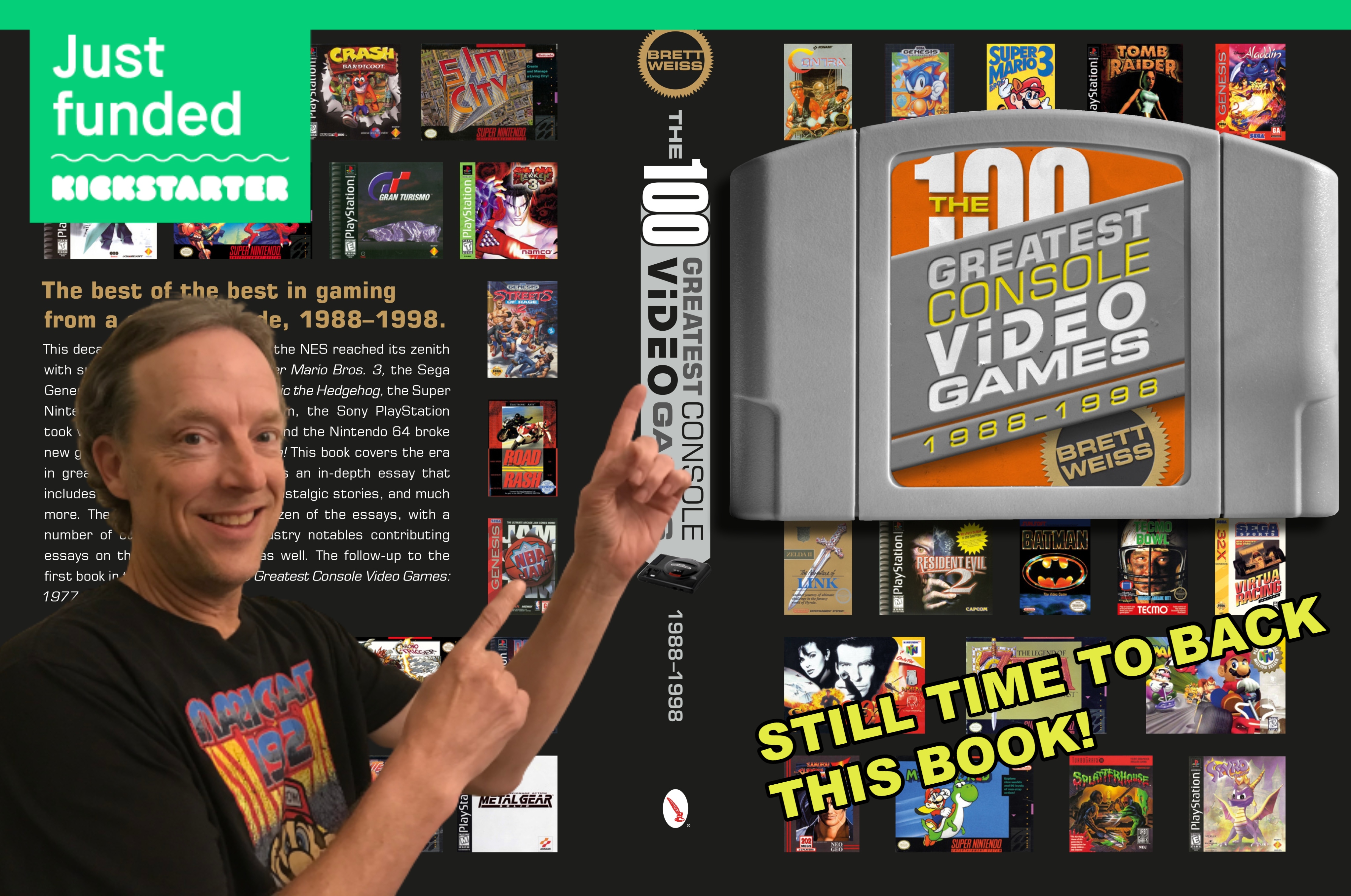
The 100 Greatest Console Video Games: 1988-1998 is the follow-up to my best-selling book, The 100 Greatest Console Video Games: 1977-1987. The Kickstarter campaign for the book is now live! You can check it out HERE, read more info right here on this page, or skip down to the Sonic the Hedgehog chapter below. Thanks for reading, and for your support!

A gorgeous, full-color hardcover, The 100 Greatest Console Video Games: 1988-1998 will pick up right where the first book left off, covering the next decade in the history of video games in incredible detail. Each of the 100 games featured will get at least 2 to 3 full pages of thorough coverage, including history, production info, author anecdotes,  developer quotes, gameplay details, reviews, box art, screenshots, vintage magazine ads, fun facts, and more.

As many gamers know, the period this book covers--1988-1998--is incredibly crucial to the video game industry. It was during this time that the NES reached its zenith with such titles as Contra and Super Mario Bros. 3, the Sega Genesis blew everyone away with Sonic the Hedgehog, the Super Nintendo released to critical acclaim with perhaps the greatest pack-in game of all time (Super Mario World), the Sony PlayStation took video games to the next level with games like Metal Gear Solid and Tomb Raider, and the Nintendo 64 broke new ground with 3D Mario and 3D Zelda. Games for other consoles are included in this book as well, such as the TurboGrafx-16, Neo Geo, 3DO, and Sega Saturn, CD, and 32X. There's even an Atari Jaguar game! There are obvious choices in the book as well as some dark horse picks--you'll have a blast flipping through the pages with friends and arguing over which titles should and shouldn't have been included.

During this phenomenal era, a TON of great games were released, but I and my team of writers narrowed the field down to the best of the best. I wrote more than a dozen of the 100 chapters in the book, while other writers and industry notables contributed chapters on their favorite games. Among other terrific talents, these creators include: Greg Sewart, former editor for Electronic Gaming Monthly; Shane Stein, Executive Producer of Adventures in Game Chasing; Brian Lesyk, host of the Pass The Controller podcast; Kale Menges, game artist and developer; and Matt Miller, high score champion. Further, popular YouTuber and author Chris "The Irate Gamer" Bores wrote an incredibly insightful foreword. The contributing writers did a fantastic job--I truly believe you will have as much fun reading their awesome work as I did. And I enjoyed it a lot!

The 100 Greatest Console Video Games Vol. 2: 1988-1998 will be a walk down memory lane for seasoned gamers and a great history lesson for younger folks. And it will be entertaining and educational for everyone. Finally, the long-awaited follow-up to The 100 Greatest Console Video Games: 1977–1987 will be here in late 2022!

Every Kickstarter backer will get their name in the book as a special thank you, and there are other cool rewards for backers as well. Thanks for supporting me on this grand adventure! Feel free to share this Kickstarter with anyone who loves retro gaming!


Here are some sample pages. They will look much and bigger when you are holding the physical book in your hands. 


Wednesday, April 13, 2022

Nostalgic Top Gun Review for the Nintendo NES


My latest book, The NES Omnibus Vol. 2 (M-Z), features what I call Insider Insights, which are reflections, reviews, and nostalgic stories about many of the games, written by industry professionals. As many of you know, each game gets an entire page or more, and these stories do a great job of bringing the culture surrounding these games to life. My buddy Kale Menges wrote the following about Top Gun, a beloved game for the NES that many, many kids and adults bought, rented, or borrowed from friends back in the day. Enjoy!

Insider Insight: When I was around eight or nine, I thought there was nothing cooler than fighter pilots and the machinery they flew in. Even at that young age, I'd already seen the movie Top Gun countless times. It was like X-Wings and TIE Fighters, only real (per se). One Saturday morning during this era, my dad came home with a small bundle of NES cartridges after scouting pawnshops for yard tools. I was super excited because the bundle included Top Gun.

Top Gun wasn't the greatest flight simulator, and even by NES standards it felt a little barebones. Compared to the game's 1989 sequel, it definitely feels more like a prototype than a full-fledged game. Regardless, we enjoyed it immensely. The game's opening used a nice rendition of the movie's theme music, lending the action some authenticity. The core gameplay was solid and challenging, to the point I don’t remember getting past the fourth or fifth mission.

I do remember, though, the infamous landing sequence and the bragging rights that came with consistently landing the F-14 on the carrier deck instead of just exploding in the water. That part of the game was legitimately stressful and nerve-racking (note: it still is), and now after working as a game developer, I've come to suspect that there was certainly some kind of “dice roll” occurring under the hood to determine your success regardless of how precisely you followed the on-screen instructions during the sequence—the margin of error for your plane's altitude and airspeed never seems to be the same twice. I thought it was funny that, while the aerial combat was more engaging when played with a joystick controller like the Advantage or Quickshot, landing felt easier with the d-pad. - Kale Menges, Artist and Game Developer

Tuesday, April 12, 2022

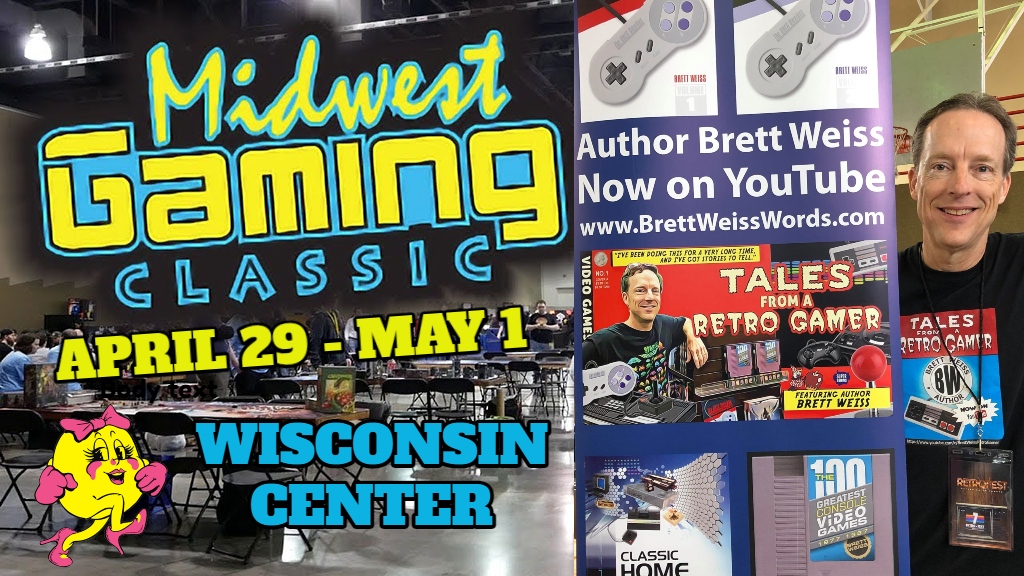
Midwest Gaming Classic - Wisconsin Center April 29 - May 1


Hey, I'm super excited to announce that I'll be at the Midwest Gaming Classic in Milwaukee, Wisconsin April 29 - May 1. I'll have a limited supply of my books on hand to sell and autograph. I hope to see some of you there! You can check out their website HERE.

Sunday, April 3, 2022

The 5 Best Movies I Watched When I Had Covid-19!


Thanks to working at home, social distancing, wearing masks, and just plain luck, I managed to avoid getting Covid for the first couple of years of the pandemic. That changed a few weeks ago when I suddenly developed a cough and congestion and was zapped of energy. I took a home test, and sure enough I had “the Covid,” meaning it was time to quarantine from everyone but my wife, my dog, and my bedroom television set.

Fortunately, I didn’t feel horrible, and I have no long-term effects that I’m aware of. However, for those first few days of my illness, I certainly didn’t feel like doing anything but lying in bed and starting at the TV. Also fortunate is that we’re living in a time when we’ve got virtually unlimited options for new and old movies, thanks to various streaming services (I was too lazy/sick to rifle through my DVD and Blu-ray collection). I caught several films worth mentioning and share five of them here, in order of release.

Barbarella (1968)

Jane Fonda has never appeared more beautiful than in Barbarella, an absurd but highly entertaining sexy sci-fi space romp based on the French comic book created by Jean-Claude Forest. It won’t appeal to all tastes—if you only like “good” movies, you should probably avoid—but the retro-futuristic lingo, charming (if cheap) special effects, colorfully weird set designs, and overall psychedelic vibe appeal to my oft-warped tastes. Fonda plays the space-faring title character, out to stop the evil Durand Durand (yes, this is where the pop band Duran Duran got their name) from unleashing his positronic ray on the galaxy. I’ve seen this movie probably 10 times or more, but I’ve only seen Schindler’s List once. What’s wrong with me?

Dressed to Kill (1980)

Brian De Palma has directed beloved cult classics like Phantom of the Paradise (1974) and Blow Out (1981), but he’s also helmed high-grossing Hollywood blockbusters, including The Untouchables (1987) and Mission: Impossible (1996). My favorite of his is Carrie (1976), followed closely by Dressed to Kill (1980), one of the best thrillers ever made. A mysterious blonde woman kills a psychiatrist’s patient. A prostitute discovers the body and becomes the prime suspect as well as the murder’s next target. The film is gripping, erotic, and intense, and it’s got an excellent cast, which includes Michael Caine, Angie Dickenson, Nancy Allen, and Keith Gordon. If that last name doesn’t ring a bell, Gordon appeared in Jaws 2 (1978) and Christine (1983) and played Rodney Dangerfield’s son in one of the funniest comedies of the ‘80s: Back to School (1986).

Say Anything (1989)

Prior to becoming a Hollywood hotshot with films like Jerry McGuire (1996) and the autobiographical Almost Famous (2000), Cameron Crowe made his directorial debut with Say Anything, starring John Cusack as an underachiever who begins dating a college-bound valedictorian played by Ione Skye. The movie is funny, quirky, smart, and even a little dark (at least for a romantic comedy). Crowe’s background as a contributing editor with Rolling Stone magazine and screenwriter for Fast Times at Ridgemont High certainly informs his work here, and it should come as no surprise that the film has an excellent soundtrack with tunes by Nancy Wilson, Cheap Trick, the Red Hot Chili Peppers, Living Colour, and Depeche Mode. Of course, the most memorable song in the film is Peter Gabriel’s “In Your Eyes,” which blasts from the boombox Cusack’s character holds up to get the girl’s attention.

A Perfect Murder (1998)

Like the next film on this list, A Perfect Murder deals with a beautiful wife who commits adultery with a handsome man, but it’s more of a crime thriller than that movie. In fact, it’s a semi-remake of Alfred Hitchcock’s Dial M for Murder (1954). A struggling Wall Street financier (played by Michael Douglas) hires a man (Viggo Mortenson) to kill his much younger wife (Gwyneth Paltrow), who has a $100 million trust fund. But there’s a twist: the man he hires is his wife’s lover! Douglas is in full Gordon Gekko mode here, looking dapper in a suit and exuding greed and selfishness. Paltrow is no saint either, and the film is extremely well made: perfectly cast, slick, nicely paced, and enjoyable throughout.

Unfaithful (2002)

Unfaithful is an unusual movie about an extra-marital affair because the cheater in question doesn’t appear particularly bored or unhappy with her marriage. The adulterer is Connie, played by Diane Lane, and she cheats on Edward, played by Richard Gere. They have money, they’re attractive, and they have a son they adore. But apparently, Connie, who doesn’t seem otherwise impulsive or irresponsible, wants something more in life: excitement. Or at least a good romp in the hay with a stranger. Said excitement/romp is provided by a chance encounter with a rare book dealer, who happens to be impossibly smooth, impossibly romantic, and impossibly good looking. The film was directed by Adrian Lyne, who is better known for the similarly themed Fatal Attraction (1987) and Indecent Proposal (1993). Unfaithful doesn’t have quite the oomph of those movies, but it’s intriguing nevertheless.

Saturday, March 26, 2022

The NES Omnibus Vol. 2 (M-Z) is NOW AVAILABLE! New Nintendo Book!


My newest book, The NES Omnibus Vol. 2 (M-Z), is NOW AVAILABLE!

Yes, I can finally say that the book is available to everyone. US residents can order signed copies direct from me, and anyone can get the book on Amazon. Thanks to the pandemic, there were delays getting the book out, and then there were some other snags I discuss in my new video. Thanks to everyone for their patience! But I'm finally finished processing all the pre-orders and Kickstarters, so if you get your order in now, I can ship your book immediately! This has been a labor of love, and I'm so glad it's finally here for everyone to enjoy! I had some great contributing writers on this project, sharing their nostalgic NES stories, including 8-bitEric, John "Gamester81" Lester, Rob McCallum, Shane Stein (Executive Producer of Adventures in Game Chasing), Patrick Hickey Jr. (author of The Minds Behind the Games), and Chris "The Irate Gamer" Bores, among many, many others.

The book features reviews/synopses for every US release for the NES, plus author memories, insider insights from industry folks, quotes from vintage magazines, video game history, box art, screenshots, vintage ads, foreign NES releases, a beautiful centerfold with all your favorite NES characters, and more. Of course, it is the sequel to The NES Omnibus Vol. 1 (A-L), which featured a foreword by The Goldbergs creator Adam F. Goldberg.

In other news, it's also convention season! If you’re a promoter and would like to have me out as a guest at your show, please send me a message @ brettw105@sbcglobal.net. Here’s my updated bio if you are curious about my qualifications. I’ve done a bunch of shows and have taken part in some fun panels on video game history and retro gaming in general.

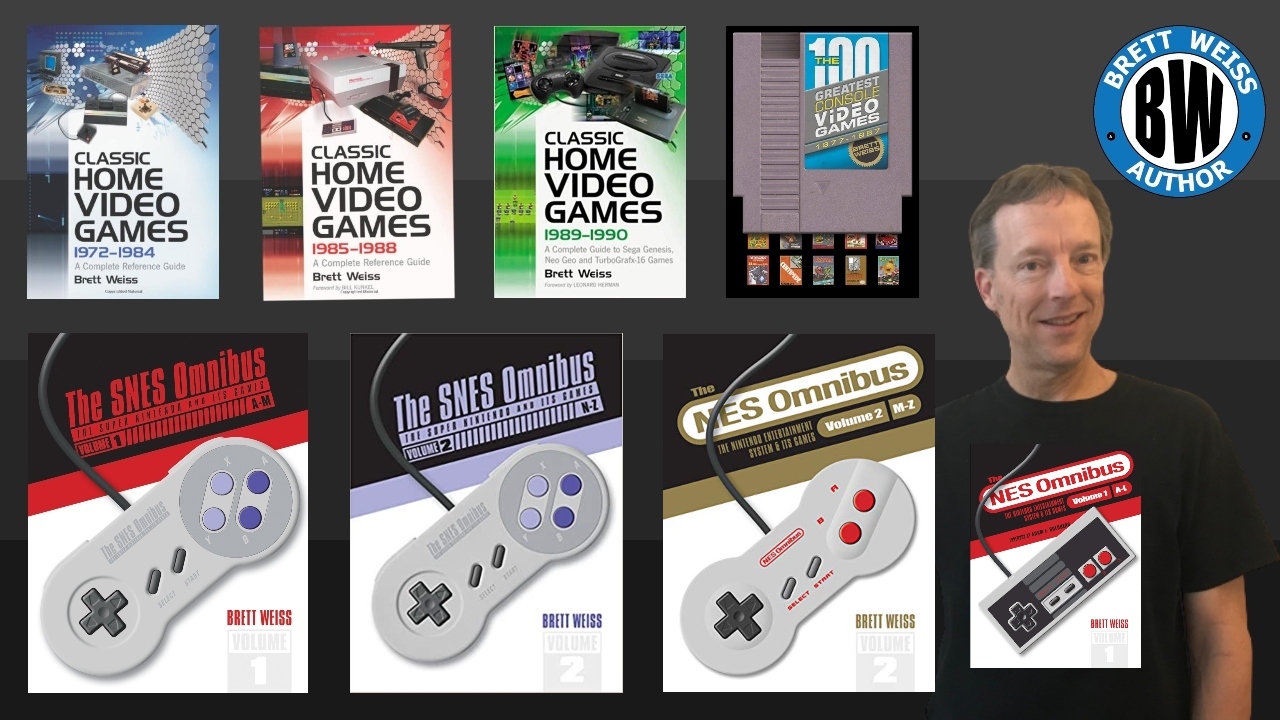
National columnist Brett Weiss has been a gamer since 1975 and a professional gaming writer since 1997. He’s the author of a dozen books, including The NES Omnibus Vol. 1 and 2, The SNES Omnibus Vol. 1 and 2, and The100 Greatest Console Video Games: 1977-1987. With his Classic Home Video Games series, he wrote the world’s first complete guides to numerous video game consoles, including the Atari 5200, Atari 7800, ColecoVision, Intellivision, Vectrex, Odyssey2, Nintendo Entertainment System, Sega Master System, Neo Geo, TurboGrafx-16, and Sega Genesis. He also wrote the world’s first and only encyclopedia about the rock band KISS.

A frequent guest at video game and pop culture conventions around the country, Weiss appeared in the 2021 documentary “Playing With Power: The Nintendo Story,” and he was in The History Channel’s Nintendo episode of “The Toys That Built America: Snack Sized.” He’s written for countless publications, including Game Informer, Fangoria, Filmfax, Robot Magazine, The Writer, Mystery Scene, The Comics Buyer’s Guide, Alter Ego, Back Issue, AntiqueWeek, Video Game Collector, Video Game Trader, Classic Gamer Magazine, Game Room, The Pingame Journal, and Old School Gamer Magazine. He’s also worked for AtGames and Opcode Games as a consultant, editor, and writer, and he’s the host of the quickly growing YouTube show, Tales from a Retro Gamer.


***Thanks to everyone for their support, their subs and views on YouTube, their book purchases, their reviews of my books, their kind words online and at conventions, and every other positive vibe you send me way. I couldn’t do it without you!