Wednesday, April 13, 2022

Nostalgic Top Gun Review for the Nintendo NES


My latest book, The NES Omnibus Vol. 2 (M-Z), features what I call Insider Insights, which are reflections, reviews, and nostalgic stories about many of the games, written by industry professionals. As many of you know, each game gets an entire page or more, and these stories do a great job of bringing the culture surrounding these games to life. My buddy Kale Menges wrote the following about Top Gun, a beloved game for the NES that many, many kids and adults bought, rented, or borrowed from friends back in the day. Enjoy!

Insider Insight: When I was around eight or nine, I thought there was nothing cooler than fighter pilots and the machinery they flew in. Even at that young age, I'd already seen the movie Top Gun countless times. It was like X-Wings and TIE Fighters, only real (per se). One Saturday morning during this era, my dad came home with a small bundle of NES cartridges after scouting pawnshops for yard tools. I was super excited because the bundle included Top Gun.

Top Gun wasn't the greatest flight simulator, and even by NES standards it felt a little barebones. Compared to the game's 1989 sequel, it definitely feels more like a prototype than a full-fledged game. Regardless, we enjoyed it immensely. The game's opening used a nice rendition of the movie's theme music, lending the action some authenticity. The core gameplay was solid and challenging, to the point I don’t remember getting past the fourth or fifth mission.

I do remember, though, the infamous landing sequence and the bragging rights that came with consistently landing the F-14 on the carrier deck instead of just exploding in the water. That part of the game was legitimately stressful and nerve-racking (note: it still is), and now after working as a game developer, I've come to suspect that there was certainly some kind of “dice roll” occurring under the hood to determine your success regardless of how precisely you followed the on-screen instructions during the sequence—the margin of error for your plane's altitude and airspeed never seems to be the same twice. I thought it was funny that, while the aerial combat was more engaging when played with a joystick controller like the Advantage or Quickshot, landing felt easier with the d-pad. - Kale Menges, Artist and Game Developer

Tuesday, April 12, 2022

Midwest Gaming Classic - Wisconsin Center April 29 - May 1


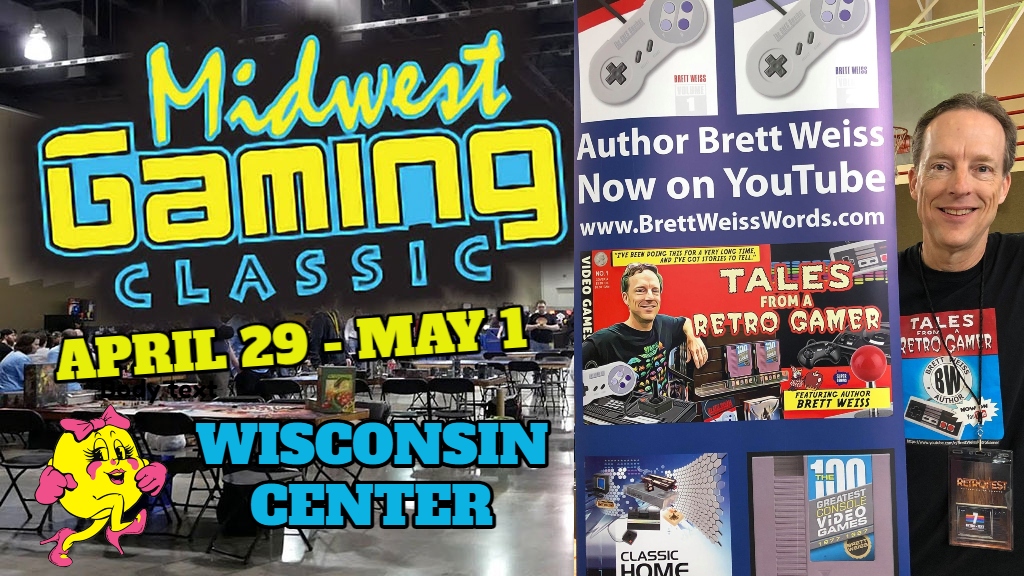
Hey, I'm super excited to announce that I'll be at the Midwest Gaming Classic in Milwaukee, Wisconsin April 29 - May 1. I'll have a limited supply of my books on hand to sell and autograph. I hope to see some of you there! You can check out their website HERE.

Sunday, April 3, 2022

The 5 Best Movies I Watched When I Had Covid-19!


Thanks to working at home, social distancing, wearing masks, and just plain luck, I managed to avoid getting Covid for the first couple of years of the pandemic. That changed a few weeks ago when I suddenly developed a cough and congestion and was zapped of energy. I took a home test, and sure enough I had “the Covid,” meaning it was time to quarantine from everyone but my wife, my dog, and my bedroom television set.

Fortunately, I didn’t feel horrible, and I have no long-term effects that I’m aware of. However, for those first few days of my illness, I certainly didn’t feel like doing anything but lying in bed and starting at the TV. Also fortunate is that we’re living in a time when we’ve got virtually unlimited options for new and old movies, thanks to various streaming services (I was too lazy/sick to rifle through my DVD and Blu-ray collection). I caught several films worth mentioning and share five of them here, in order of release.

Barbarella (1968)

Jane Fonda has never appeared more beautiful than in Barbarella, an absurd but highly entertaining sexy sci-fi space romp based on the French comic book created by Jean-Claude Forest. It won’t appeal to all tastes—if you only like “good” movies, you should probably avoid—but the retro-futuristic lingo, charming (if cheap) special effects, colorfully weird set designs, and overall psychedelic vibe appeal to my oft-warped tastes. Fonda plays the space-faring title character, out to stop the evil Durand Durand (yes, this is where the pop band Duran Duran got their name) from unleashing his positronic ray on the galaxy. I’ve seen this movie probably 10 times or more, but I’ve only seen Schindler’s List once. What’s wrong with me?

Dressed to Kill (1980)

Brian De Palma has directed beloved cult classics like Phantom of the Paradise (1974) and Blow Out (1981), but he’s also helmed high-grossing Hollywood blockbusters, including The Untouchables (1987) and Mission: Impossible (1996). My favorite of his is Carrie (1976), followed closely by Dressed to Kill (1980), one of the best thrillers ever made. A mysterious blonde woman kills a psychiatrist’s patient. A prostitute discovers the body and becomes the prime suspect as well as the murder’s next target. The film is gripping, erotic, and intense, and it’s got an excellent cast, which includes Michael Caine, Angie Dickenson, Nancy Allen, and Keith Gordon. If that last name doesn’t ring a bell, Gordon appeared in Jaws 2 (1978) and Christine (1983) and played Rodney Dangerfield’s son in one of the funniest comedies of the ‘80s: Back to School (1986).

Say Anything (1989)

Prior to becoming a Hollywood hotshot with films like Jerry McGuire (1996) and the autobiographical Almost Famous (2000), Cameron Crowe made his directorial debut with Say Anything, starring John Cusack as an underachiever who begins dating a college-bound valedictorian played by Ione Skye. The movie is funny, quirky, smart, and even a little dark (at least for a romantic comedy). Crowe’s background as a contributing editor with Rolling Stone magazine and screenwriter for Fast Times at Ridgemont High certainly informs his work here, and it should come as no surprise that the film has an excellent soundtrack with tunes by Nancy Wilson, Cheap Trick, the Red Hot Chili Peppers, Living Colour, and Depeche Mode. Of course, the most memorable song in the film is Peter Gabriel’s “In Your Eyes,” which blasts from the boombox Cusack’s character holds up to get the girl’s attention.

A Perfect Murder (1998)

Like the next film on this list, A Perfect Murder deals with a beautiful wife who commits adultery with a handsome man, but it’s more of a crime thriller than that movie. In fact, it’s a semi-remake of Alfred Hitchcock’s Dial M for Murder (1954). A struggling Wall Street financier (played by Michael Douglas) hires a man (Viggo Mortenson) to kill his much younger wife (Gwyneth Paltrow), who has a $100 million trust fund. But there’s a twist: the man he hires is his wife’s lover! Douglas is in full Gordon Gekko mode here, looking dapper in a suit and exuding greed and selfishness. Paltrow is no saint either, and the film is extremely well made: perfectly cast, slick, nicely paced, and enjoyable throughout.

Unfaithful (2002)

Unfaithful is an unusual movie about an extra-marital affair because the cheater in question doesn’t appear particularly bored or unhappy with her marriage. The adulterer is Connie, played by Diane Lane, and she cheats on Edward, played by Richard Gere. They have money, they’re attractive, and they have a son they adore. But apparently, Connie, who doesn’t seem otherwise impulsive or irresponsible, wants something more in life: excitement. Or at least a good romp in the hay with a stranger. Said excitement/romp is provided by a chance encounter with a rare book dealer, who happens to be impossibly smooth, impossibly romantic, and impossibly good looking. The film was directed by Adrian Lyne, who is better known for the similarly themed Fatal Attraction (1987) and Indecent Proposal (1993). Unfaithful doesn’t have quite the oomph of those movies, but it’s intriguing nevertheless.

Saturday, March 26, 2022

The NES Omnibus Vol. 2 (M-Z) is NOW AVAILABLE! New Nintendo Book!


My newest book, The NES Omnibus Vol. 2 (M-Z), is NOW AVAILABLE!

Yes, I can finally say that the book is available to everyone. US residents can order signed copies direct from me, and anyone can get the book on Amazon. Thanks to the pandemic, there were delays getting the book out, and then there were some other snags I discuss in my new video. Thanks to everyone for their patience! But I'm finally finished processing all the pre-orders and Kickstarters, so if you get your order in now, I can ship your book immediately! This has been a labor of love, and I'm so glad it's finally here for everyone to enjoy! I had some great contributing writers on this project, sharing their nostalgic NES stories, including 8-bitEric, John "Gamester81" Lester, Rob McCallum, Shane Stein (Executive Producer of Adventures in Game Chasing), Patrick Hickey Jr. (author of The Minds Behind the Games), and Chris "The Irate Gamer" Bores, among many, many others.

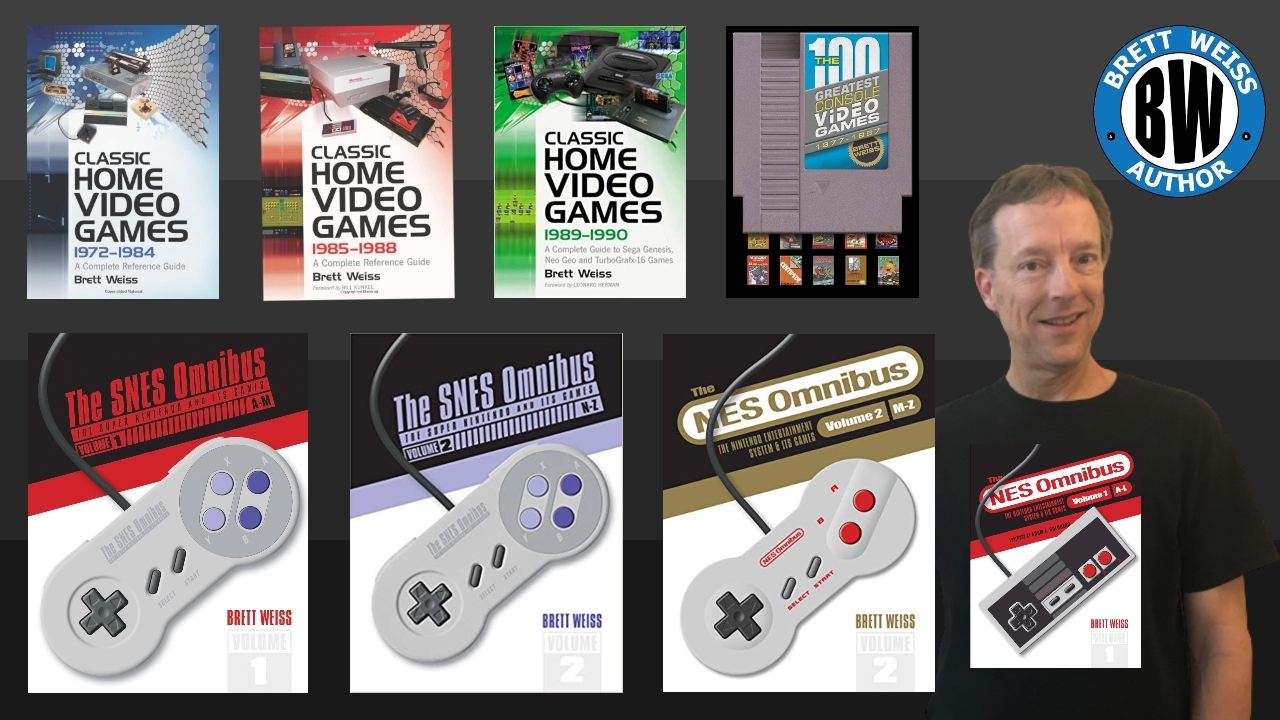
The book features reviews/synopses for every US release for the NES, plus author memories, insider insights from industry folks, quotes from vintage magazines, video game history, box art, screenshots, vintage ads, foreign NES releases, a beautiful centerfold with all your favorite NES characters, and more. Of course, it is the sequel to The NES Omnibus Vol. 1 (A-L), which featured a foreword by The Goldbergs creator Adam F. Goldberg.

In other news, it's also convention season! If you’re a promoter and would like to have me out as a guest at your show, please send me a message @ brettw105@sbcglobal.net. Here’s my updated bio if you are curious about my qualifications. I’ve done a bunch of shows and have taken part in some fun panels on video game history and retro gaming in general.

National columnist Brett Weiss has been a gamer since 1975 and a professional gaming writer since 1997. He’s the author of a dozen books, including The NES Omnibus Vol. 1 and 2, The SNES Omnibus Vol. 1 and 2, and The100 Greatest Console Video Games: 1977-1987. With his Classic Home Video Games series, he wrote the world’s first complete guides to numerous video game consoles, including the Atari 5200, Atari 7800, ColecoVision, Intellivision, Vectrex, Odyssey2, Nintendo Entertainment System, Sega Master System, Neo Geo, TurboGrafx-16, and Sega Genesis. He also wrote the world’s first and only encyclopedia about the rock band KISS.

A frequent guest at video game and pop culture conventions around the country, Weiss appeared in the 2021 documentary “Playing With Power: The Nintendo Story,” and he was in The History Channel’s Nintendo episode of “The Toys That Built America: Snack Sized.” He’s written for countless publications, including Game Informer, Fangoria, Filmfax, Robot Magazine, The Writer, Mystery Scene, The Comics Buyer’s Guide, Alter Ego, Back Issue, AntiqueWeek, Video Game Collector, Video Game Trader, Classic Gamer Magazine, Game Room, The Pingame Journal, and Old School Gamer Magazine. He’s also worked for AtGames and Opcode Games as a consultant, editor, and writer, and he’s the host of the quickly growing YouTube show, Tales from a Retro Gamer.


***Thanks to everyone for their support, their subs and views on YouTube, their book purchases, their reviews of my books, their kind words online and at conventions, and every other positive vibe you send me way. I couldn’t do it without you!

Saturday, January 22, 2022

Top Celebrity Deaths in 2021

This past year, like pretty much all years, was tough on celebrities. After all, despite their larger-than-life personas, they’re mortal just like the rest of us, and the Grim Reaper does come a calling eventually. Among the most famous celebrities who passed away in 2021 were the ageless Betty White, super comedian Norm McDonald, longtime talk show host Larry King, and baseball legend Hank Aaron.

Every time I hear about the death of a celebrity whose work I enjoyed, such as the ones mentioned above, I get a little sad. Some will say this is foolish, that you should only mourn people you actually know, but celebrities play important roles in people’s lives, including mine. Not only do they entertain us, they can enliven and even enlighten us as we go through our oftentimes ordinary lives, and that is certainly nothing to take lightly.

After much thought, I produced this (alphabetical) list of celebrities whose passing last year affected me the most on a personal level. Call it a tribute of sorts to eight people I didn’t know, but who impacted me significantly nevertheless.

Johnny Crawford

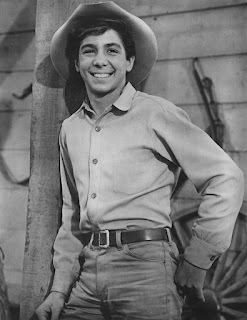
When I was little, my dad watched a lot of westerns on television. I wasn’t really into western movies, and I didn’t care a thing about Bonanza or Gunsmoke. However, I did thoroughly enjoy The Lone Ranger and The Rifleman as their pacing and story structure had more in common with a superhero or adventure yarn than they did a typical western. Johnny Crawford played the title character’s son in The Rifleman, and he was about my age on the show when I watched it on Saturday afternoons with my dad. Great memories, for sure.

Richard Donner

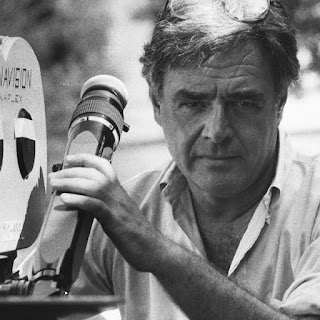
My parents didn’t take us kids to the movies very often (we usually just watched them on TV), but we saw some of the biggies on the big screen, including Superman: The Movie, released in theaters in 1978 when I was 12-years-old. Director Richard Donner treated the source material with respect, which is something I appreciated since I was (and am) a big comic book fan, and he made a star out of Christopher Reeve. He also made me believe a man could fly—an experience I’ll never forget.

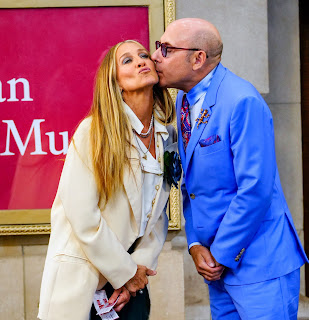
Willie Garson


A year or so ago, I decided to watch the first episode of Sex and the City (1998-2004). It had been a cultural phenomenon when it originally aired, and I wanted to see what all the fuss was about. I quickly got hooked and binged the entire series over the next few weeks. One of my favorite characters was Stanford Blatch, Carrie Bradshaw’s gay bestie played with charm and humor by Willie Garson. It’s a shame he passed during the filming of And Just Like That..., the Sex and the City follow-up series currently airing on HBO Max, because I could see him filling in for Samantha Jones as the fourth friend at the lunch/dinner table.

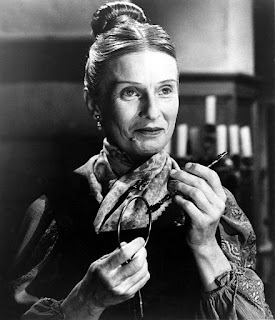
Cloris Leachman

What’s my favorite Mel Brooks film? My favorite horror comedy? My favorite Gene Wilder movie? That would be the brilliant Young Frankenstein (1974), a pitch-perfect send-up of the old Universal Monster movies of the 1930s. Cloris Leachman played Frankenstein estate caretaker Frau Blücher, and she was so funny in the film that she cracked up not only the audience but also Wilder—to the point that they had to do numerous reshoots of certain scenes. I also loved her in The Last Picture Show (1971), where she played the adulterous high-school gym teacher's neglected wife.

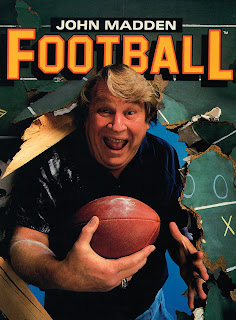
John Madden

My dad and I didn’t have a ton in common—he was mystified by my interest in art, comic books, science fiction, heavy metal music, and the like—but we bonded over sports, including NFL football. John Madden was the best color commentator in the history of the league, and we certainly enjoyed his humor, his honesty, his excellent analysis of the game, and his picks for the All-Madden team. Personally, as a gaming writer, I especially like what he did to elevate video game football, most notably demanding that each team field 11 onscreen players (a big deal back in the day) or he wouldn’t attach his name to the game.

Peter Scolari

The sitcom Bosom Buddies (1980-1982) may have had a silly premise—a couple of guys who dress like women so they can live in a cheap hotel—but the friendship between Kip Wilson, played by Tom Hanks, and Henry Desmond, played by Peter Scolari, seemed genuine and was often touching. Hanks essentially became our generation’s Jimmy Stewart, but Scolari had a nice (if far less fame-filled) career in his own right. It was especially cool seeing him star in the excellent sitcom Girls (2012-2017) as Hannah’s dad.

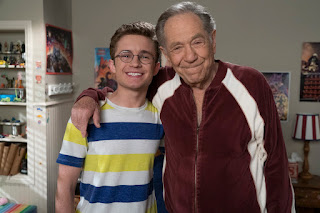
George Segal

My wife and I enjoy watching The Goldbergs, even though it can be corny and over-the-top. It’s very funny at times, and of course we love all the ‘80s references, even though (there’s that phrase again) there are anachronisms galore (there’s a reason the intro to each episode says it was “1980-something”). George Segal played Albert “Pops” Solomon on the show, and he was a hoot. Pops was quite the ladies’ man, but the character’s most endearing quality was his close relationship with his grandson, Adam Goldberg—they were the best of friends.

Charlie Watts

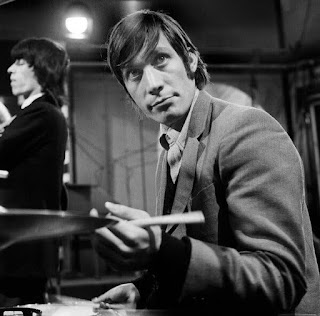
If you’re not sure why Rolling Stones drummer Charlie Watts was considered great, listen to the original version of “Ruby Tuesday” and the machine gun fire of Watts’ perfectly timed drumming. Then, listen to the lifeless drumming in The Scorpions’ cover of the tune. See what I mean? Watts was known not only for his steady beat, but also the steady nature of his personality and his dapper appearance. Many fans didn’t realize he was also in many ways the brains behind the band. I’m glad I finally got to see the Stones live in 2015—so brilliant!

Monday, January 17, 2022

How to Make More Time to Play Video Games


How to Make More Time to Play Video Games

Being involved and interested in video games is something that many people can enjoy and relate to. The growth in gaming’s popularity has been nothing but rapid. However, this is for a good reason. The improvements in consoles and games have been extremely impressive. Now, it can even be hard to tell the difference between gaming graphics and real life, not to mention that the gameplay and creativity of some of these releases are extremely captivating.


If you really love playing games, then there is a good chance that you don’t even have enough time to play to your heart’s content. Sometimes, it feels like there just aren’t enough hours in the day. For people who truly love gaming, this can be frustrating. Only being able to play for an hour after work will always leave you wanting more. So how do you change this? Although you can’t add more hours to the day, you can find more free time to play video games. If you need some tips on doing so, you might want to consider some of the following advice.

Wake up Earlier

Of course, one of the best ways to give yourself more time is to wake up earlier. You would be surprised with how much more you can get done by waking up an extra hour or so before your current alarm. Of course, there are many people who don’t like the idea of gaming in the morning or before work. However, that isn’t what you have to use your morning time for. Use these extra early hours to do chores that you would usually do later on in the day. This could be doing the cleaning, meal preparation, or exercise. Doing this can free up more time for later in the day, meaning you have more opportunities to game.

Have Good Transportation

If it currently takes you a long time to get around, you might want to look at better alternatives. Sometimes public transport can take a long time to bring you to your destination. If this is the case for you, then you might need to check out some alternatives. This could mean potentially taking an alternative route or heading off earlier to beat traffic. If you want to remove public transportation altogether, then investing in your own vehicle is a good idea. Looking at used vans Liverpool can provide you with an option to shave some minutes off that travel time throughout the day.

Be More Time Efficient

Procrastination is something that a lot of people struggle with. After all, it is far too easy to get distracted by thoughts and people when you should be focusing on something else. However, if you can buckle down and be more time-efficient, you will be amazed at how much time you can save. Even just being more organized can help you with this. Outline a schedule of what you need to do in the day and when to do it. This way, you will be more encouraged to do things in a more focused and efficient manner.

Wednesday, December 8, 2021

KISS: Psycho Circus—The Nightmare Child PC Game - - INTERVIEW WITH DEVELOPER SVERRE KVERNMO


Confession time: when it comes to the 1990s to the present, my history with computer games is spotty at best. Sure, I’ve played DOOM and some of the other major releases, and I even taught myself to type with Mario Teaches Typing (it was much more effective than my high school typing class), but I’m definitely a console gamer through-and-through. By and large, I prefer the simplicity, immediacy, and “plug-and-play” vibe of the console experience over computer games.

In addition to console gaming, one of my other big hobbies is following the rock band KISS. Not only did I grow up loving their music and plastering their photos all over my walls, I wrote a book about the band called Encyclopedia of KISS: Music,Personnel, Events and Related Subjects (2016, McFarland Publishers). Unfortunately, there aren’t many KISS video games. Almost none, in fact. There was the dreadful, unlicensed pinball sim for the PlayStation called KISS Pinball, and you can play various KISS songs on Guitar Hero and Rock Band.

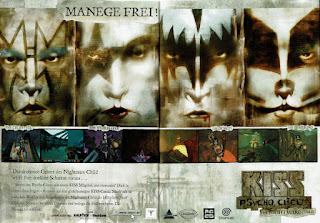
But that’s about it. Or it would be if it weren’t for KISS: Psycho Circus—The Nightmare Child, released for the PC in 2000 (and ported to the Sega Dreamcast the same year). The game was published by Gathering of Developers, developed by Third Law Interactive, and is based on characters from KISS Psycho Circus, a comic book series published by Image Comics and Todd McFarlane Productions that ran from 1997 to 2000.


The DOOM-like first-person-shooter, which was a welcome release as far as this KISS fan is concerned, puts the four members of a band called Wicked Jester (a riff on Paul and Gene’s pre-KISS group, Wicked Lester) in a hellish world of hideous creatures, demons, and circus mutants, including bosses. Beginning as a mere mortal, the player must battle said baddies to progressively acquire the powers of The Elder, the supernatural alter-egos of KISS: Demon, Starbearer, Beast King, and Celestial.

There are three types of weapons you can wield in the game: melee (beast claws, thornblade, twister and punisher), common (zero cannon, magma cannon, windblade and scourge), and ultimate (stargaze, galaxion, spirit lance and draco). You can also grab temporary power-ups and other items, including health and attack and defense powers. In addition, players should assemble Elder armor comprised of gauntlets, boots, a belt, a vest, a plate, and a mask. There are four realms to explore: Water, Fire, Air, and Earth.

A special Collector’s Edition was released for the PC in a lenticular box, with cover art from the four 1978 KISS solo albums. The package also included an official VIP backstage pass and neck chain from the Psycho Circus Tour, a KISS poster signed by all four band members, a limited version of the game’s official strategy guide, and a game disc that is signed by each member of the development team.

I recently had the distinct privilege of catching up with Sverre Kvernmo, the lead designer on KISS: Psycho Circus—The Nightmare Child. He discussed the development history of the game, why they made a game based on the comic book instead of the band itself, his interactions with KISS co-founders Paul Stanley and Gene Simmons, and much more.

BRETT WEISS: How did this project come about, and how did you get involved? Were you working for Third Law Interactive?

SVERRE KVERNMO: Not at the time, no—we founded Third Law as a result of the opportunity to make Psycho Circus. KISS wanted a video game for their reunion tour, basically. Who were we to deny them that?

WEISS: Did you meet and confer with members of KISS during this project? If so, please explain what that was like.

KVERNMO: Yeah, Gene Simmons was directly involved, so it was great the few times we met him. Paul and Gene both showed up during the release party in full battle gear. It was a bit of a childhood dream seeing them up close like that—they really are larger than life people!

WEISS: I’ve heard that Gene Simmons hates video games, that he considers them a waste of time, and that this is why there are hardly any KISS video games. Do you know if this is true?

KVERNMO: [Laughs] First I’ve heard of it! In his defense, he instantly took to Nightmare Child—seeing the player first-person, wielding a giant battle axe, wading through hordes of hellions. He’s either very good at faking enthusiasm, or he absolutely loved it at the time!

At the end of the day, I’m sure it might have been just a matter of generating more money off the brand for him, but at the very least, he doesn’t hate them so much that he’d miss out on a good business opportunity. It was only ever intended as a light hearted action romp, after all. Not a full-fledged metaverse, as we know some games today.

WEISS: Why was the game based on the comic book instead of the band members themselves? I could see a pretty cool KISS game starring Ace, Gene, Peter and Paul.

KVERNMO: By the time we decided to make a game, the comics were already part of the media package tied to the album that reunited the original band members. Also, Todd McFarlane was an absolute titan at the time, recently having revitalized the Spider-Man brand, etc.

Cool as KISS is on their own and in concert, without the adjoined comic books I honestly doubt we would’ve taken the project, for fear of not being able to bridge the gap between the two mediums. They just don’t have any natural enemies within their own well-defined universe.

The comics basically provided the much-needed art direction, setting, theme, and leeway for much of the game’s “off stage” content. Just KISS on its own would have required a much more thorough from-scratch design, which in turn would likely have had to be green lit every step of the way by the KISS machinery. You kind of need something with the gravity of, say Iron Maiden’s Eddie, to believably challenge them to full effect in a prolonged action game.

Expecting a massive synergic overlap between The KISS Army and gamers in general was perhaps a big ask in the first place, so yeah—tying the comic book audience into that equation might have further complicated things, but there just isn’t an easily available established equal opposite force that the four of them might tackle, without such a vehicle.

Certainly not KISS Meets the Phantom of the Park! Perhaps Vinnie Vincent? But then, what army does he lead—ancient Egyptians? [Laughs] This is all unproblematic for the abstract playing field of something like a pinball machine, but not so much for a first-person shooter, where you’re largely assumed to need some manner of motivation to get into it. At least, that’s how we felt at the time we were considering it.

WEISS: Why did you decide on creating a first-person shooter as opposed to a beat-’em-up game or some other genre?

KVERNMO: The first-person genre was basically still in plasticity, taking shape around those years. The only common experience the Third Law Interactive team had at the time was trying to make a contending product—John Romero’s Daikatana.

For whatever reasons we weren’t able to make that game, we felt pretty strong from years of work-hours together, that we had a good first-person shooter in us, if we weren’t, say, trying to keep a linear curve of world-altering progression going, like that happening off an unbelievable hat-trick like first Wolfenstein 3D, then DOOM, then Quake.

First-person level designers weren’t easy to come by back then, and we had four that were tried and tested—if not quite up to Romero’s wet dream of again doubling down on his latest project. (I mean, you have to at least try right?)

We had very gifted programmers, one of which had been coding the genre since id made Wolfenstein.

Also, really solid artists that already knew the FPS production pipeline by heart and had flair to boot—so the genre for the game was never in question. The FPS iron was still hot (though in retrospect, cooling), so that’s where we struck.

KISS would be neat in Mortal Kombat, I suppose, or maybe as outer quadrant gods in some mystic space-sim.

WEISS: Please discuss any special challenges you had while creating the game.

KVERNMO: Hmmm...choice of engine, perhaps. Lithtech ticked all the important boxes for us—it performed the best during critical game features tests, plus was the most affordable out of those times’ “big three” license engines. Applying the benefit of hindsight, it’s hard to argue that the Unreal Engine wouldn’t have been a better engine to get comfortable with, seeing as that was heading for world domination, but that’s perhaps more of a personal perspective.

I also regret agreeing to shut down an unofficial KISS mod that was taking shape at the time. We should have just left them to it; might even have helped our own game do better if the mod turned out well. I don’t know what I was thinking—I only got to where I was due to similar work, so shame on me for not protesting to that one.

The actual production of the game happened with few hitches and on time. It was more challenging to let go of all the nice bells and whistles we might have added if we spent three-to-six more months on it to really make it shine, than any real trouble along the way of the game that actually got made. A one-off comic book leading up to the game’s beginning was an early wish-list item we had to drop.

WEISS: Do you remember what KISS songs were used during the game and how they were used

KVERNMO: Of course! But bar one stroke of inspiration for how “God Gave Rock and Roll to You” was used, the band’s music really didn’t add as much as it might have and felt a bit tacked on with bad glue. The KISS machinery feared the game would be considered/hacked-into an “unofficial KISS compilation album” (which would’ve cost a LOT more than the game budget) if we were given full-length songs to distribute, so instead we were basically given 10 second snippets from 10 songs the team picked together. I mean, the snippets are great, and it does add to the experience, but yeah, more could have been done there. In a way it was good, though, since it gave our inhouse “synthwave” composer more creative freedom, without having to worry about butting heads with KISS all day.

Personally, I picked “Unholy” as my only must-have, was happy to see “Black Diamond” also go in but was a little skeptical of the “Love Gun” pick, thinking it might be too cringy and fourth-wall breaching (considering it’s in a run-and-gun game), but it worked out fine.

WEISS: Anything else you care to share about working on KISS: Psycho Circus?

KVERNMO: I really wanted the Spaceman character to do a full five-minute guitar solo in airborne ecstasy after picking up his ultimate weapon toward the end of his episode. I never told anyone on the team about it, but that’s what I secretly wanted. Smoke machines, lightning balls, laser spotlights, and glowing cosmic vistas. The full Ace Frehley experience!